

Aviator Strategy: What the Maths Actually Allows
In short: No Aviator strategy shifts the odds: the round is settled before betting opens, and the chance it reaches any multiplier m is 0.97 divided by m, so a 2x target clears roughly 48.5% of rounds.
Aviator decides its result before you can place a bet, which rules out every system claiming to read the next round and leaves you two levers: how much you stake, and when you leave.
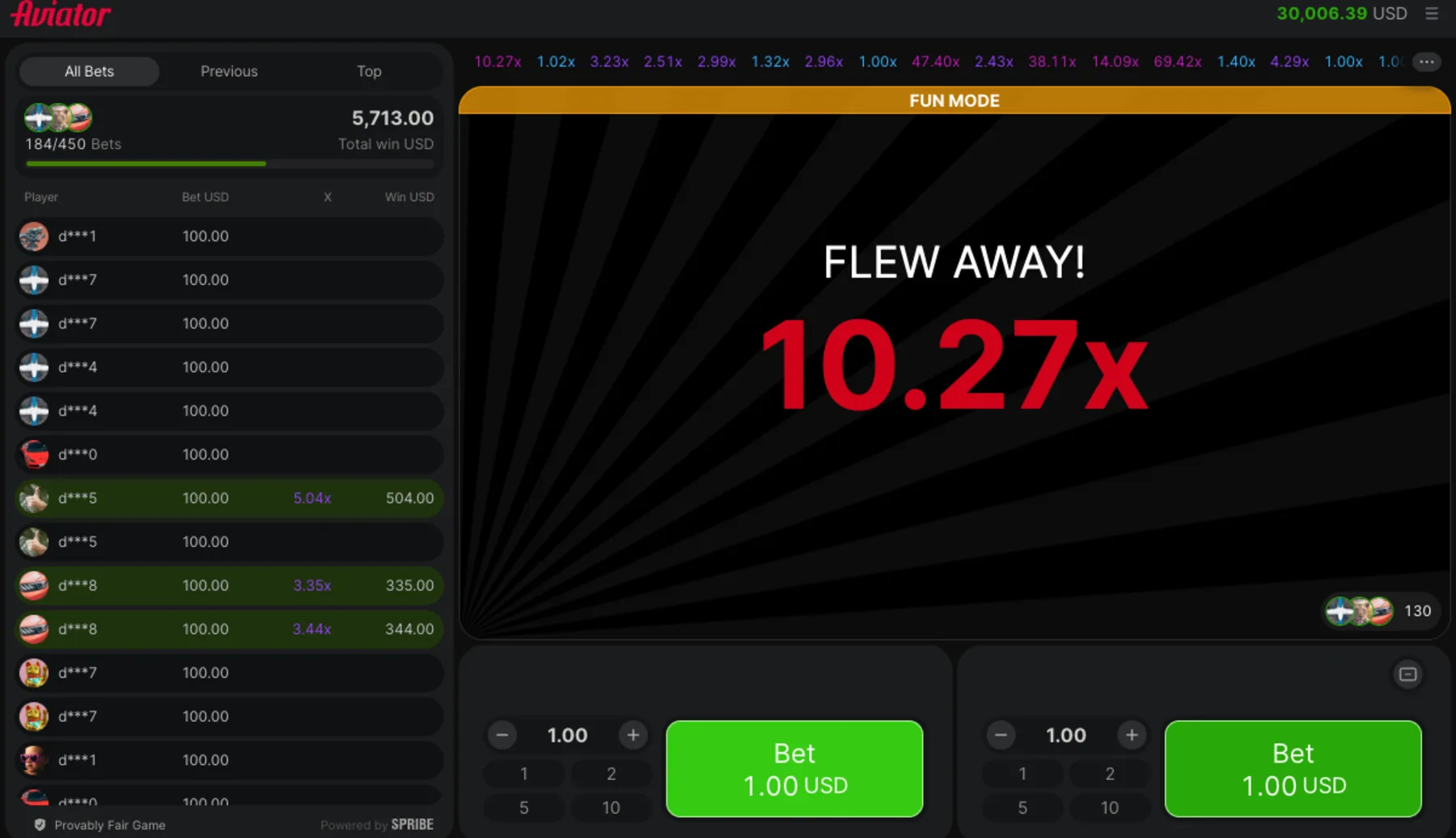
Table of contents
- Decide Your Exit Before the Round Starts
- Know What Your Target Costs
- Let the Client Cash Out for You
- Mind the Tie Rule
- Treat the History Strip as Decoration
- Doubling Stops at the Stake Ceiling
- Split the Stake if You Want Both Outcomes
- Test It Where It Costs Nothing
- Skip Anything Sold as a Predictor
- If None of These Fit Your Play
- Why the Last Round Tells Nothing
- What 0.97 Divided by M Buys
- How Often Each Cash-Out Target Clears
- Where Doubling Runs Out of Room
- What We Actually Measured
- Our Ten Rounds, as the Client Logged Them
- Key Terms Used on This Page
- What Else Do Readers Ask
Decide Your Exit Before the Round Starts
The result is already fixed when betting opens, so the only decision left to you is where to leave. Write the number down before the plane moves.
Know What Your Target Costs
Divide 0.97 by your target to get the share of rounds that clear it: about 48.5% at 2x, 19.4% at 5x and 9.7% at 10x.
Let the Client Cash Out for You
Our scripted cash-out polled the button five times a second and still missed rounds that passed its target. Auto Cash Out fires inside the game instead.
Mind the Tie Rule
An exact tie loses. Spribe's rules say a 1.5x auto cash-out on a round that leaves at 1.5x is a losing round, because 1.25x means the curve reached 1.24x and stopped.
Treat the History Strip as Decoration
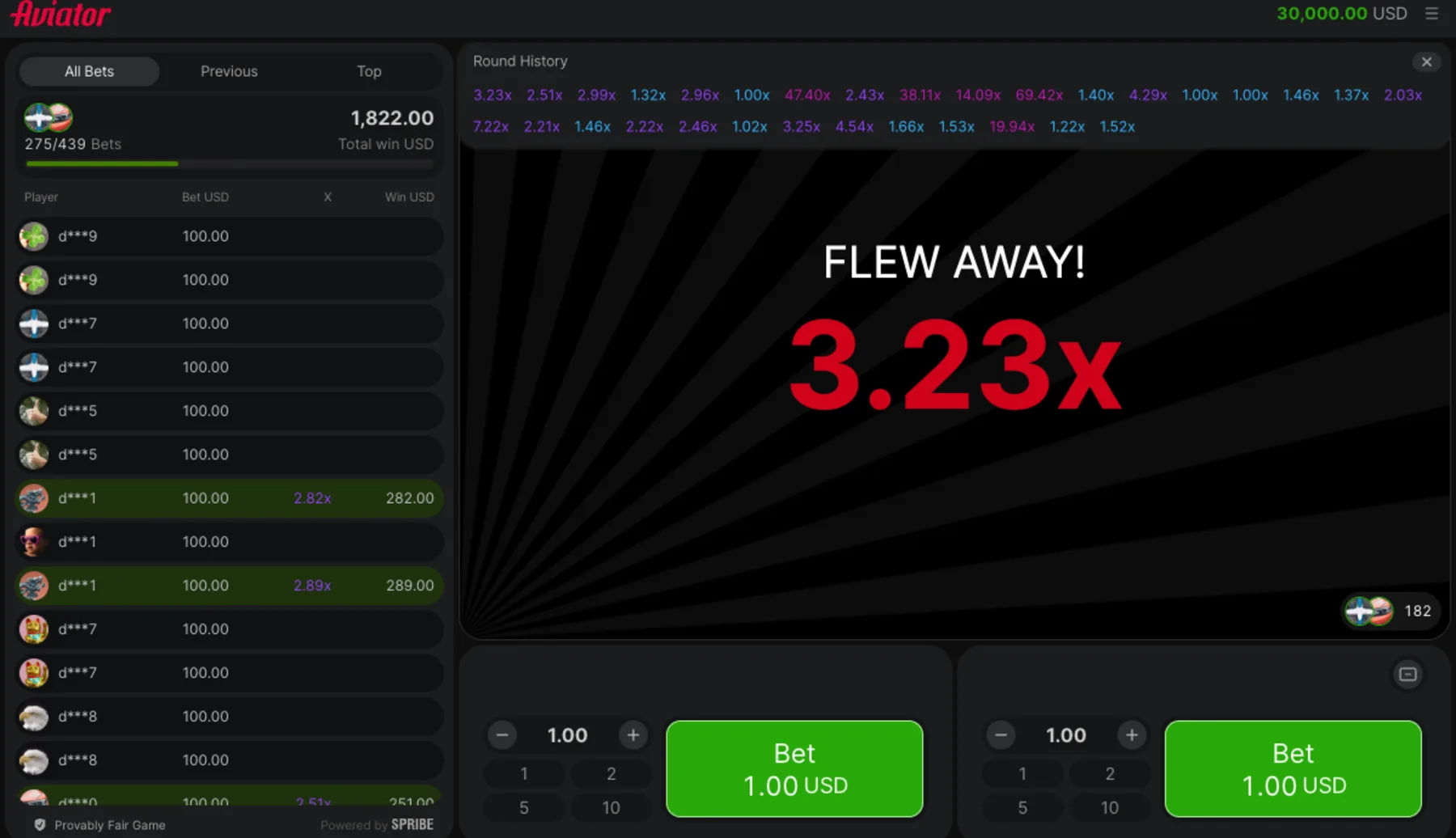
A run of low rounds carries no debt into the next one. Each result comes from a hash of seeds with no connection to the round before it.
Doubling Stops at the Stake Ceiling
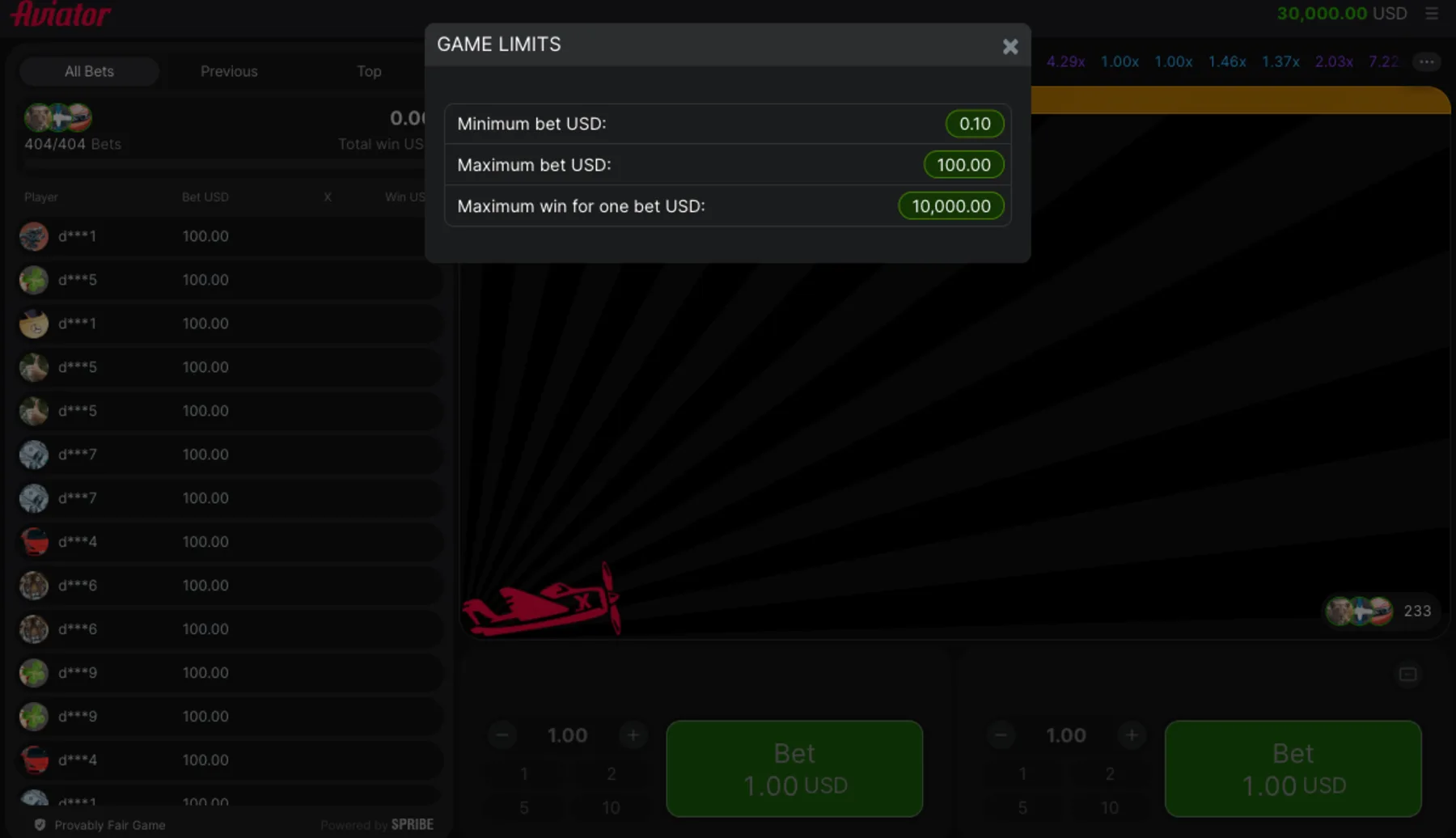
Martingale dies on the maximum bet rather than on bad luck. Spribe's USD demo caps a stake at $100.00, so a 0.10 opening bet allows ten bets and the eleventh, at $102.40, is over the limit.
Split the Stake if You Want Both Outcomes
Two bet panels run in the same round. Leaving one at a low target and letting the other fly narrows the spread of results without touching the average, which stays at 0.97 per stake either way.
Test It Where It Costs Nothing
Spribe's demo opens with $30,000.00 of play money and no account, which is enough to watch a plan fail for free.
Skip Anything Sold as a Predictor
We do not recommend predictor apps, signal groups or algorithm tools. The outcome is locked in before the first bet lands, so nothing remains to predict, and Check Point Research found one such product to be a clipboard hijacker with over 1,250 macOS downloads in June 2026.
If None of These Fit Your Play
Set a loss limit in the Auto Play panel, which stops the sequence when your balance falls by an amount you choose, and stop for the day when it fires.
Why the Last Round Tells Nothing
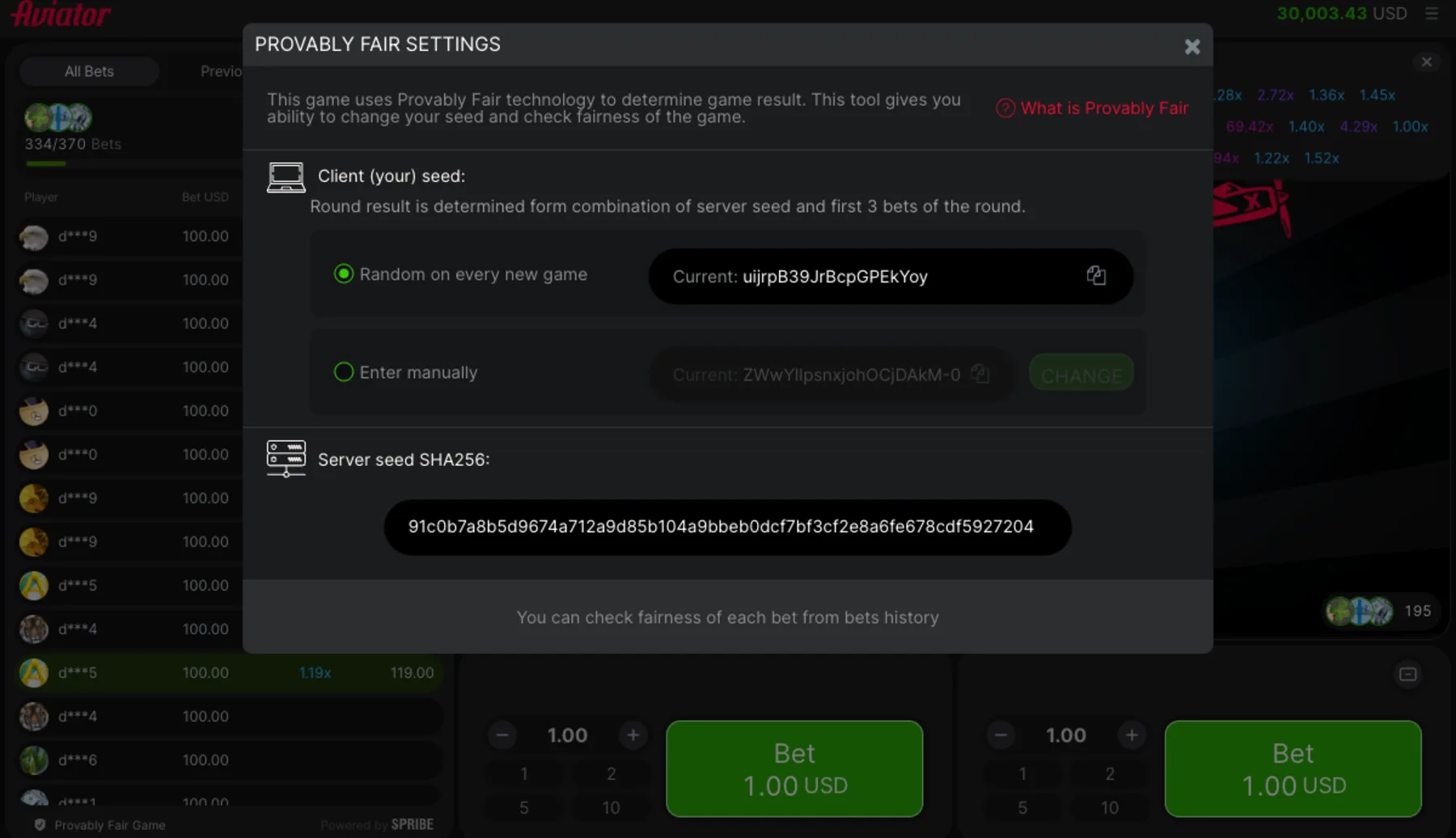
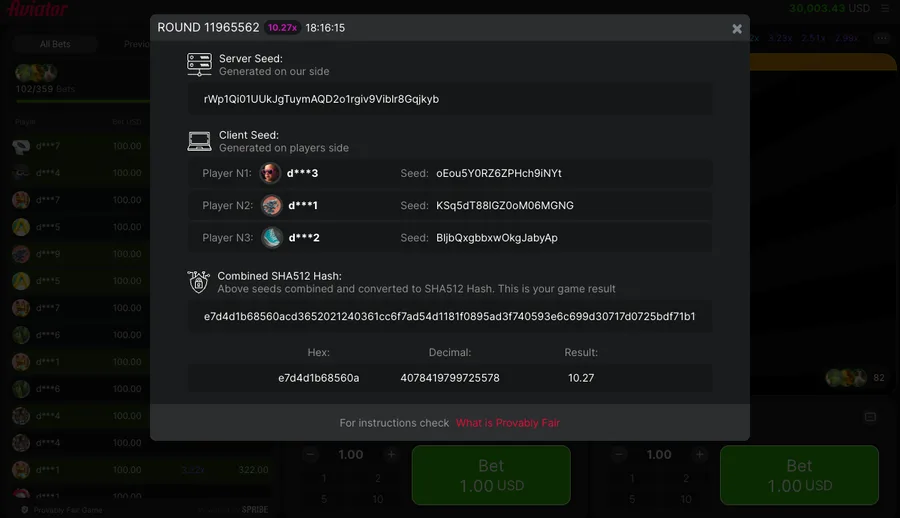
Each Aviator round is settled before betting opens, so the strip of past results is silent about the next one. The operator generates a server seed, the first three bettors contribute client seeds, and the four are hashed together into the multiplier the plane will leave at. Every one of those inputs is drawn fresh.
That is worth sitting with for a second, because almost every system sold for this game quietly assumes the opposite.
A run of eight low rounds leaves the ninth exactly where it started: as likely to end at 1.20x as the first was. The arithmetic below says how likely that is.
What 0.97 Divided by M Buys
Divide 0.97 by your target and you get the share of rounds that reach it, a rule falling straight out of the round calculation we rebuilt by hand on three demo rounds. Pick a target and the table tells you how often you collect.
How Often Each Cash-Out Target Clears
| Target multiplier | Share of rounds reaching it | Roughly, out of 100 rounds |
|---|---|---|
| 1.5x | 64.7% | 65 |
| 2x | 48.5% | 48 or 49 |
| 5x | 19.4% | 19 |
| 10x | 9.7% | 10 |
| 100x | 0.97% | 1 |
Figures current as of ; the operator's live terms prevail.
Read down the middle column and the trade becomes obvious. A low target wins often and pays little; a high one pays well and idles for long stretches. Both land in the same place over enough rounds, because multiplying the target by the hit rate gives 0.97 every time, and that 0.97 is the house edge wearing a different hat.
There is one subtlety our own session ran into. An exact tie loses, so a 2x target on a round that ends at exactly 2.00x is a losing round.
Where Doubling Runs Out of Room
Martingale fails on the stake ceiling, not on a long losing streak. The USD demo from Spribe stops a single bet at $100.00, and doubling up from $0.10 hits that wall after ten losses in a row.
At a 2x target each round loses 51.5% of the time, so ten losses in a row land once in roughly 760 sequences. That sounds rare until you notice the sequence runs dozens of times an hour, and when it hits you are down $102.30 while the eleventh bet, at $102.40, sits beyond the ceiling. The operator sets that ceiling, so it moves from lobby to lobby, though every lobby has one.
What We Actually Measured
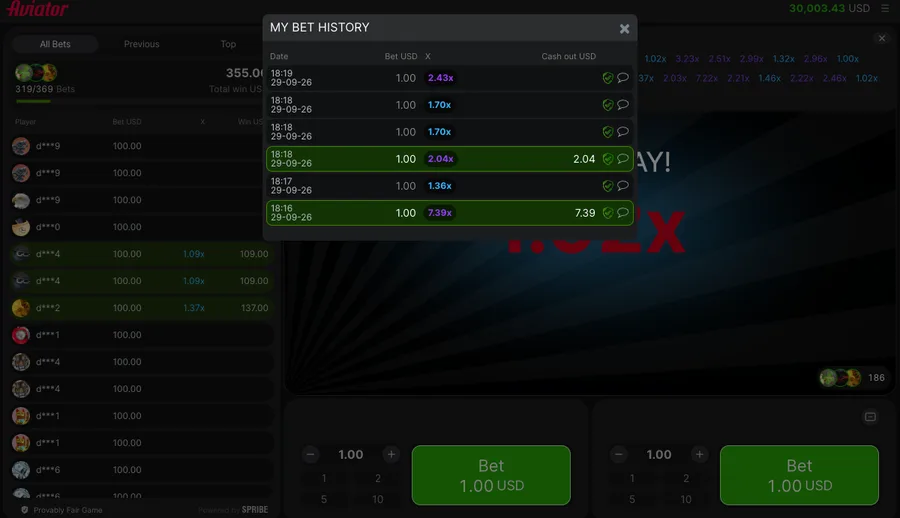
Ten rounds, one stake, and a result we would treat as a curiosity. We staked $1.00 a round in Spribe's demo on and read every outcome back from the client's own bet history rather than from notes.
Our Ten Rounds, as the Client Logged Them
| Client time | Round ended at | Cashed out |
|---|---|---|
| 18:16 | 7.39x | 7.39x |
| 18:17 | 1.36x | no |
| 18:18 | 2.04x | 2.04x |
| 18:18 | 1.70x | no |
| 18:18 | 1.70x | no |
| 18:19 | 2.43x | no |
| 18:24 | 3.00x | no |
| 18:24 | 3.00x | no |
| 18:25 | 1.64x | no |
| 18:26 | 2.13x | no |
Two rounds out of ten paid, and the session came back at 94.3%. Ten rounds measure nothing, and we would say that just as loudly if the number had come out at 300%.
The useful part is the pattern in the right-hand column. Several rounds climbed past the multiplier our scripted cash-out was aiming for and we still collected nothing, because the script was polling a button in a browser five times a second. A human is slower. That is the whole argument for Auto Cash Out, and it is the one change on this page that reliably costs a player less.
Key Terms Used on This Page
- Auto Cash Out
- A client setting that closes your bet at a chosen multiplier; the field takes 1.01 to 100 and arrives pre-filled at 1.1.
- Crash multiplier
- The value a round stops at. An exact tie with your target loses, and 1.25x means the curve reached 1.24x first.
- Martingale
- Doubling after a loss. The demo's $100.00 stake ceiling blocks the eleventh bet, which would need 102.40 from a 0.10 start.
- Hit rate
- How often a target clears: about 48.5% of rounds at 2x, and about 9.7% at 10x.
- Auto Play
- The panel that repeats bets for a set number of rounds and halts on a chosen fall or rise in the balance.
- Provably fair
- The scheme fixing a round from an operator server seed plus the client seeds of the first three bettors, hashed with SHA-512.
Not sure yet? Try the free demo first and learn the round with play money before any deposit.
Try the free demo first →Deposits and identity checks stay on the operator's own secure site.
Related Reading on This Game
More on this game, from the same section first:
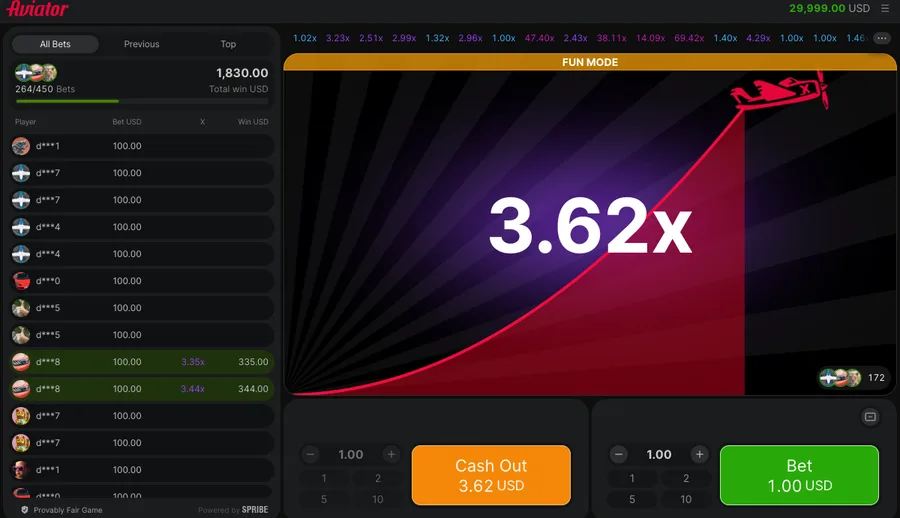 Guides
Round walkthrough
Cash out above 1.00x or lose
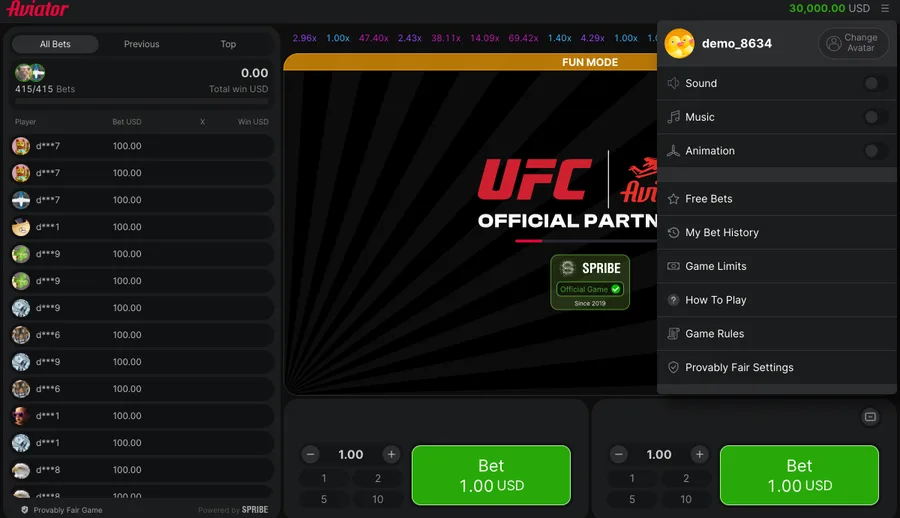 Guides
Free Demo
30,000 USD play money, no account
 Guides
Auto cash out rule
Auto exit range 1.01 to 100
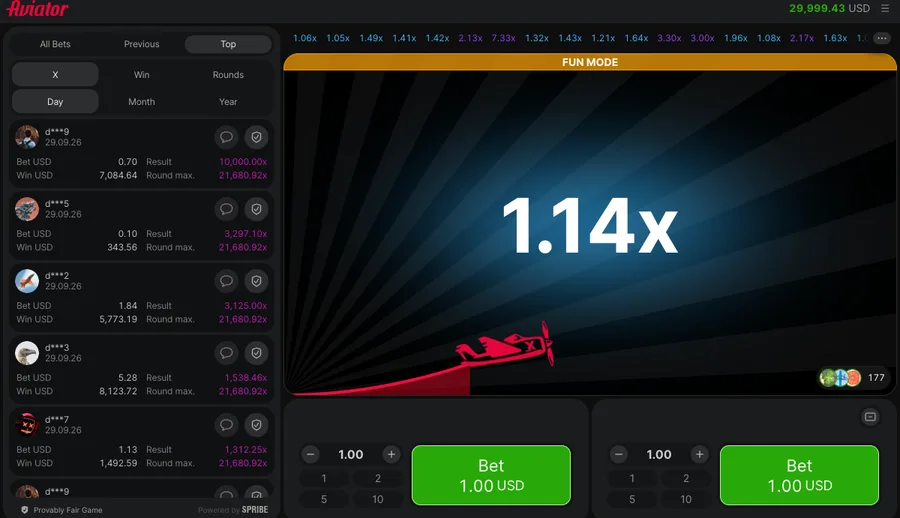 Guides
Round History Panels
30 rounds: 3 at 1.00x, median 2.22x
 Guides
Free bets and Rain
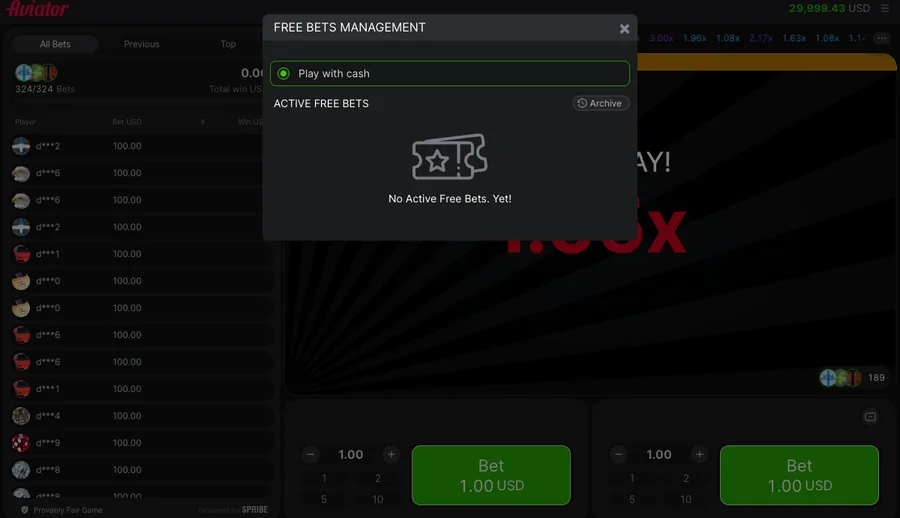
0 free bets across 10 rounds
 Reviews
Full Game Review
97% sits inside the round formula
 Reference
Provably Fair Explained
3 rounds reproduced from published seeds
 Casinos
4rabet Limits and Bonus
Stake floor INR 8.5, wagering x25
What Else Do Readers Ask?
Readers ask these after deciding that a system must exist somewhere. Each answer rests on the round formula we reproduced by hand and on the limits the client prints.
Does a losing streak make a big round due?
No. Each round is hashed from fresh seeds, so five low results in a row change nothing about the sixth.
Is one high target better than many low ones?
Neither wins. Multiply any target by its hit rate and the answer comes to 0.97, so expected return per stake stays flat.
Can two bets in one round cut the risk?
Splitting narrows the spread of outcomes. Average return holds at 0.97 per stake whatever the targets, so variance moves and expectation does not.
Where does the 0.97 figure come from?
From the round calculation we rebuilt by hand across three demo rounds, where 97 stands as the constant.
How do we test an approach?
We run it in Spribe's demo on play money, log every round from the client's own bet history, and report the sample size with the result.
Does a bigger stake improve the odds?
Stake size changes the money at risk, never the chance. A 2x target clears about 48.5% of rounds at any bet size.
Can Auto Play replace a plan?
Auto Play repeats a decision you already made. Its value sits in the stop conditions, which end a sequence on a fall you choose.