

Aviator Reference for Casino Players
Aviator reference pages sit in one place: 7 of them so far, every one dated and written to the same method. Each page settles one number or one definition, quotes it in the form the provider or the register prints it, names that source, and dates itself. The arithmetic behind every verdict and lesson sits here. Written for adults aged 18 or over.
In short: this section holds 7 reference pages about Aviator, each one dated. Each figure on these reference pages comes from one ledger: a return of 97% and a win ceiling of Not published by the developer, each quoted as the client prints it. 0 of 7 carry a score out of 10, last checked .
Table of contents
- How a Aviator Number Is Sourced
- Return First, Then the Ceiling
- Reading Order: The Number, Then Its Context
- Known Limits of the Aviator Fact Desk
- Aviator Page Index and Dates
- Aviator Facts on Record
- Provably Fair Explained
- The 97% Figure
- Max Multiplier Claims
- Legality in India
- Crash Game Rivals
- Stake Limits
- Round Odds Table
- Aviator Session Frames
- Beyond Aviator Reference Pages
How a Aviator Number Is Sourced
Sourcing a Aviator number is the whole job of this fact desk. Aviator is a crash game, and catalogues, forums, and affiliate pages argue over its numbers until the original figure disappears. Each of the 7 pages here answers one question, says the answer once in full, and names the source beside it.
Two Sources, One Answer
What happens when two publishers disagree? The page prints both figures and says which one the provider stands behind. Where the provider publishes nothing, the page says so instead of estimating. That is slower than averaging, but an averaged number is an invented number, and the reader pays for it.
- Return ranges as the provider prints them, with any operator tweak flagged.
- Win limits as the game client shows them, in the wording it uses.
- Supplier licences by number, checked in the regulator's own register.
- Definitions written in one sentence, then unpacked in a longer one.
Where the Verification Happens
We start inside the game client. If the client prints a figure, we confirm it there, working from the information panel through to the last round of a recorded session, before opening a single catalogue. A licence number is the exception: that one we check in the regulator's register. Spribe runs the free demo we use for all of it. No account, no deposit, and the information panel is open to anyone who wants to read the constraints first.
Return First, Then the Ceiling
Return comes first, and the ceiling second. Return to player leads because it is the number most often misquoted. According to Spribe, this title publishes more than one return: 97%, 94%, 96% and 98%, depending on how a round is entered, so these reference pages name which of them applies before quoting a number. Where a third-party catalogue lists a configuration the studio has not published for this title, these reference pages credit that figure to the catalogue instead of to the studio.
Where the Ceiling Comes From
The game prints its own ceiling; a listing only repeats one. The client states the win ceiling as Not published by the developer, and that is the figure the reference pages here are written against. A catalogue figure can mean something else entirely, so each page here names the screen it read. After return come the win ceiling, the bonus mechanics, the supplier licences, and the plain question of what kind of game this is.
A Definition That Travels
We write a definition page so it survives being quoted out of context: one sentence of answer, one paragraph of detail, one worked example. Need only the answer? Stop after the first sentence. Need the working? Read on.
- Every figure carries the date we last checked it.
- Unpublished values are labelled unpublished.
How This Section Verifies a Figure
Wording matters at a game fact desk. A definition that travels without its caveat turns into a false claim, so every definition here carries its exceptions, the numbers behind it, and whoever published it first.
A check date promises one thing only: somebody opened that source on that day. So a correction moves the update date of the page it touches, and we fix the ledger in the same pass. How we test sets out the full method, including how we score and what we refuse to publish.
We are an affiliate publisher. We disclose that beside every sponsored link, and no operator buys a kinder write-up. Local law decides whether you can open an account at all, and the operator enforces its own identity checks, so nothing on these reference pages is legal advice for any country.
Reading Order: The Number, Then Its Context
Reading order here is simple: a verdict gives the judgement, a lesson teaches the play, and the number sits in its context on these reference pages. Pick the page your question demands, for instance Provably Fair Explained, The 97% Figure and Max Multiplier Claims.
A reference figure is only as fresh as its source, though. Every page carries its publication and revision dates, and an operator's live terms remain the final word. Availability of the game varies by country and by region, and these pages assume a reader of 18 or older.
Pages most readers open first:
- our review and score
- the free demo, round by round
- the published RTP range
- the casinos we checked
- how the game is actually played
Known Limits of the Aviator Fact Desk
The fact desk has edges worth stating up front. It offers published figures, licence numbers, and definitions. It does not offer an independent payout audit, a certificate we issued ourselves, or a laboratory report. Where no named test laboratory covers a title, the page says exactly that.
A figure might also be configured differently in the lobby you use than in the one a catalogue listed. Treat the range as the honest answer and the single number as the exception.
- Conflicting sources are printed side by side, with the publisher of each one named.
- Nothing is quoted from a competitor or an affiliate feed as if it were a primary source.
Aviator Page Index and Dates
7 reference pages, none of them carrying a score, published between and .
| Page | Type | Published |
|---|---|---|
| Aviator Provably Fair: What You Can Actually Check | Explainer | |
| Aviator RTP FAQ: Who Publishes the 97% | FAQ | |
| Aviator Max Multiplier: What Each Side Publishes | List | |
| Aviator Game Legal in India: An Honest FAQ | FAQ | |
| Aviator vs JetX and the Rest of the Crash Shelf | Alternatives | |
| Aviator Bet Limits: Set by the Casino, Not the Game | FAQ | |
| Aviator Game Odds: the Arithmetic Behind a Round | Infographic |
Aviator Facts on Record
Aviator facts on record are the ledger values every page in this section has to agree with. Where the provider publishes a range instead of a figure, we print the range. A single number quoted somewhere else is one operator's setting, and we say so.
- Game:
- Aviator (a Spribe crash game)
- Type:
- Crash game
- RTP as published:
- 97% is the only return-to-player figure Spribe publishes, and it appears in exactly one place: the Return to Player (RTP) row on the studio's own game page.
- Max win:
- Not published by the developer.
Where the provider has never published a value, we mark it unpublished. That is a weaker answer than a number. It is also the only honest one we have.
We check every figure against that same ledger. When one contradicts it, we fix the page, the ledger, or both, and stamp the fix with the date we made it.
- We print ranges end to end, exactly as the provider publishes them.
- Whatever an operator sets, it sits inside that provider range.
Provably Fair Explained
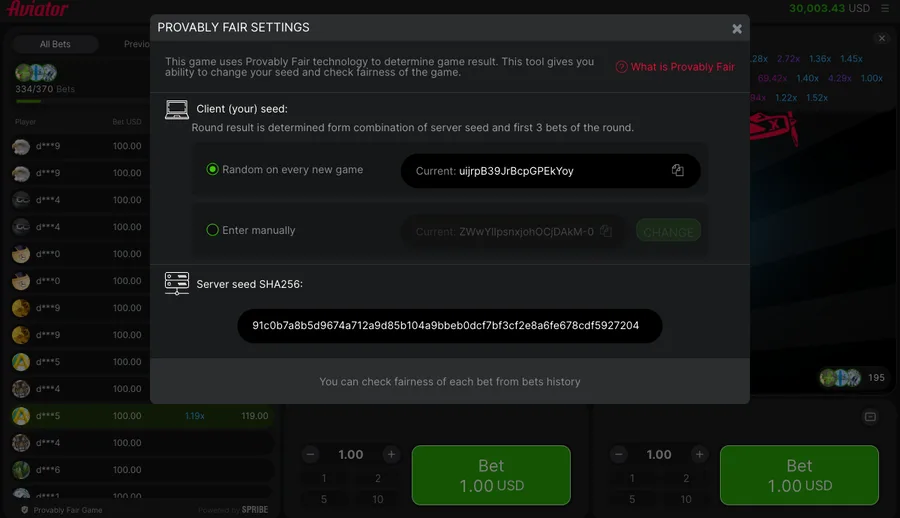
Three rounds in Spribe's official demo, three exact reproductions. Filed as an explainer page, first published on .
What the Page Settles
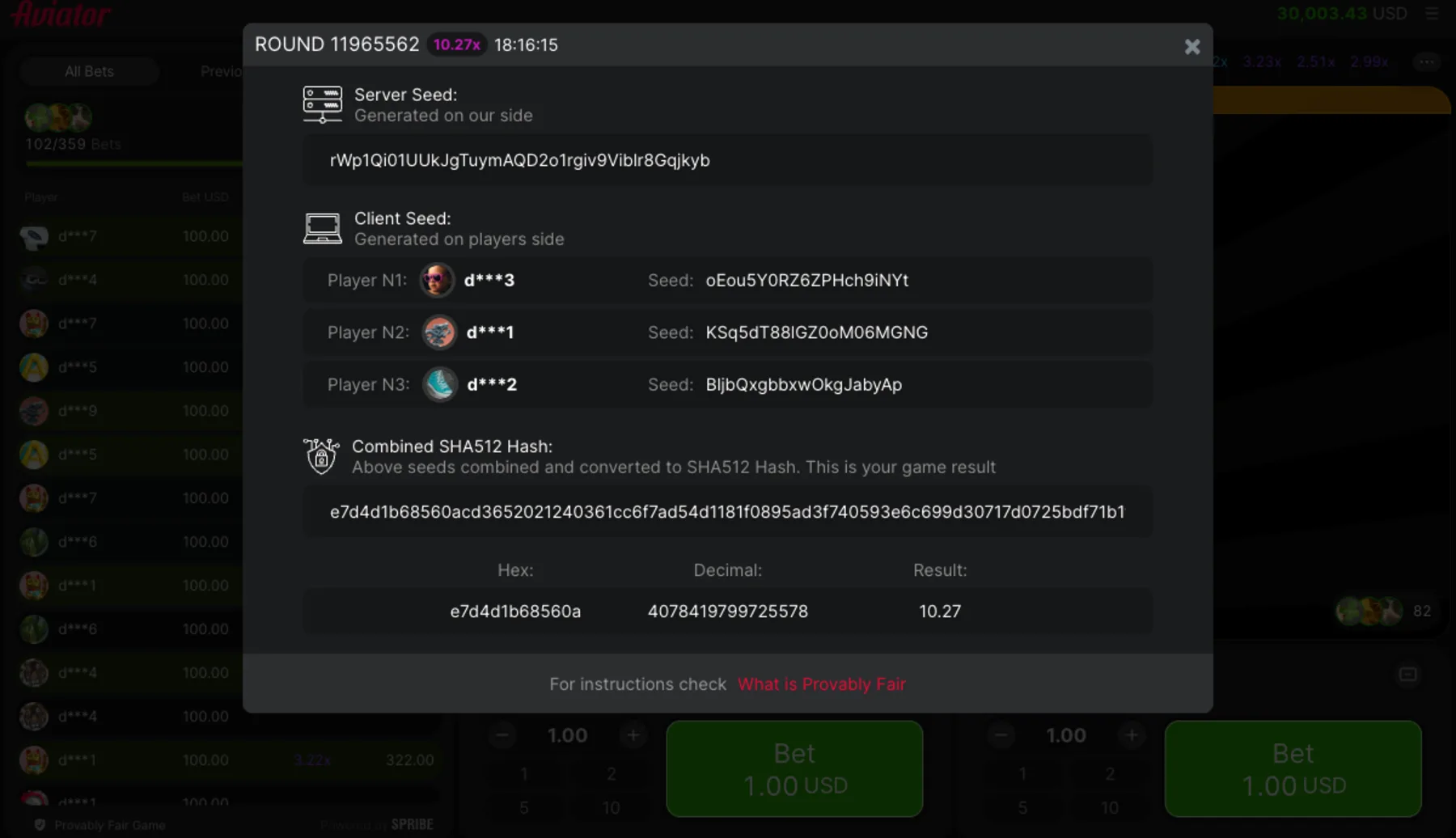
Feed the server seed and the three client seeds into SHA-512, take the first thirteen characters, and the multiplier the round ended on falls straight out.
We reproduced three Aviator rounds from their seeds: SHA-512, the 13-character slice, the result. What the fairness panel shows, and what it withholds.
The full working, with its sources, sits on Provably Fair Explained.
| Field | As recorded |
|---|---|
| Type | Explainer |
| Published | |
| Last edit | |
| Read it | Provably Fair Explained |
The 97% Figure
Spribe prints 97% once, on its own game page, and then never shows it again. A faq entry; its last edit is dated .
Where Its Figures Come From
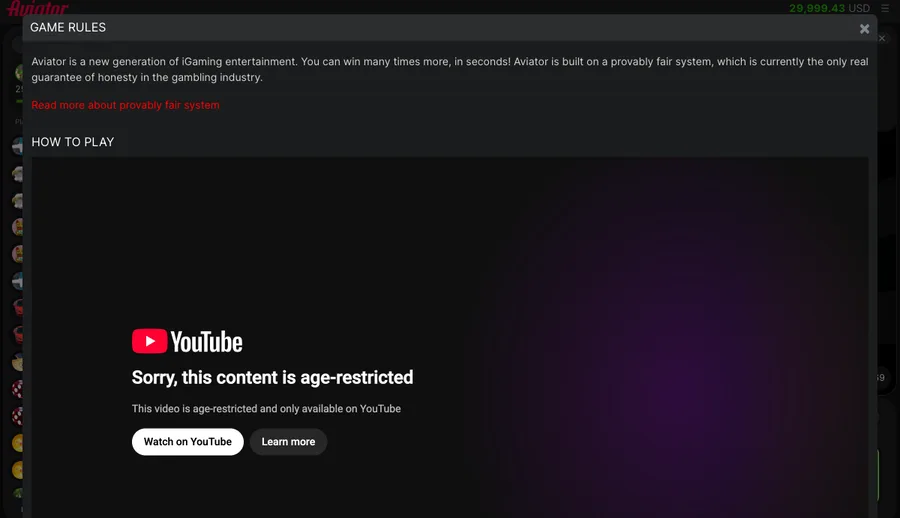
We read the demo rules panel end to end, checked six casino lobbies, and recomputed three finished rounds to see where that number actually lives.
Spribe prints one return-to-player figure for Aviator and prints it in a single place. We checked which casino lobbies repeat it and which publish nothing.
Our game notes, with their sources, are written up on The 97% Figure.
| Field | As recorded |
|---|---|
| Type | FAQ |
| Published | |
| Last edit | |
| Read it | The 97% Figure |
Max Multiplier Claims
Ten sources, one question: what stops an Aviator round climbing. This one went up on and is filed under list.
What We Verified There
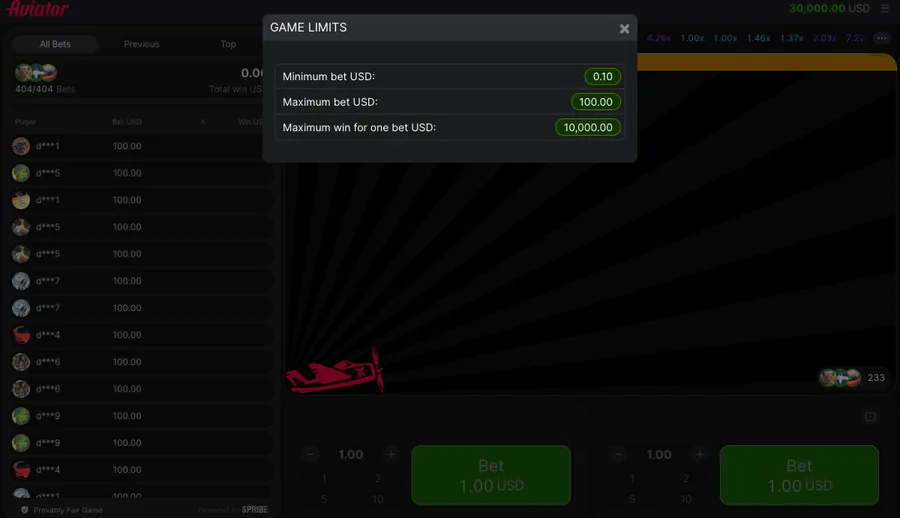
Spribe stays silent, its demo answers in dollars, and two casinos answer with figures that disagree.
The curve inside the client answers that only time limits it.
Open Max Multiplier Claims for the sourced detail.
| Field | As recorded |
|---|---|
| Type | List |
| Published | |
| Last edit | |
| Read it | Max Multiplier Claims |
Legality in India
This page is not legal advice and cannot be. Revised , and kept current by the faq desk.
Why It Earns a Place Here
What it can do is show exactly what the casinos carrying Aviator say about India in their own terms, and where they say nothing at all.
Gambling rules in India sit with the states, not with one national ban.
Legality in India carries the rest of the argument.
| Field | As recorded |
|---|---|
| Type | FAQ |
| Published | |
| Last edit | |
| Read it | Legality in India |
Crash Game Rivals
Comparison pages in this corner of the web run on copied numbers. Shelved under alternatives on , under continuous review.
What the Page Leaves Open
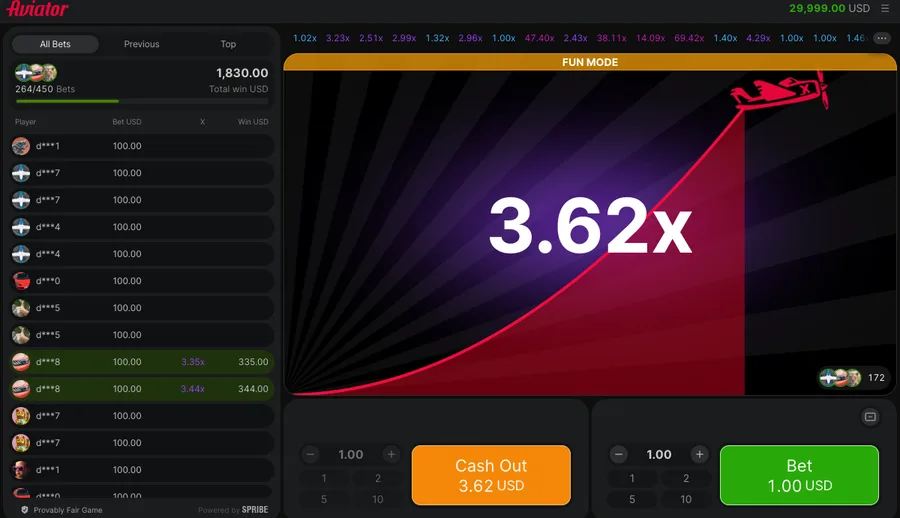
We can tell you precisely what Aviator does, because we recomputed its rounds, and precisely how little we can tell you about its neighbours.
Aviator sits on a crowded shelf of crash titles, and most of their published numbers trace back to nobody. Here is what we checked and what we left blank.
Dates, caveats, and screenshots live on Crash Game Rivals.
| Field | As recorded |
|---|---|
| Type | Alternatives |
| Published | |
| Last edit | |
| Read it | Crash Game Rivals |
Stake Limits
The floor, the ceiling and the win cap all come from the casino rather than from the game. A faq page, last revised in line with its sources.
How It Fits This Section
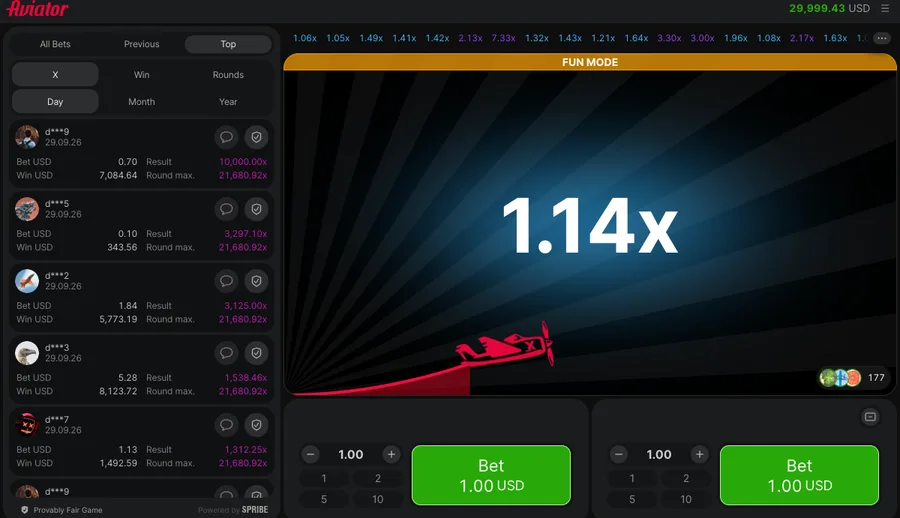
We read Spribe's own demo panel, then checked what six lobbies publish, which turned out to be mostly nothing.
We list what each lobby publishes for this game and what it leaves blank.
The figures and their registers are on Stake Limits.
| Field | As recorded |
|---|---|
| Type | FAQ |
| Published | |
| Last edit | |
| Read it | Stake Limits |
Round Odds Table
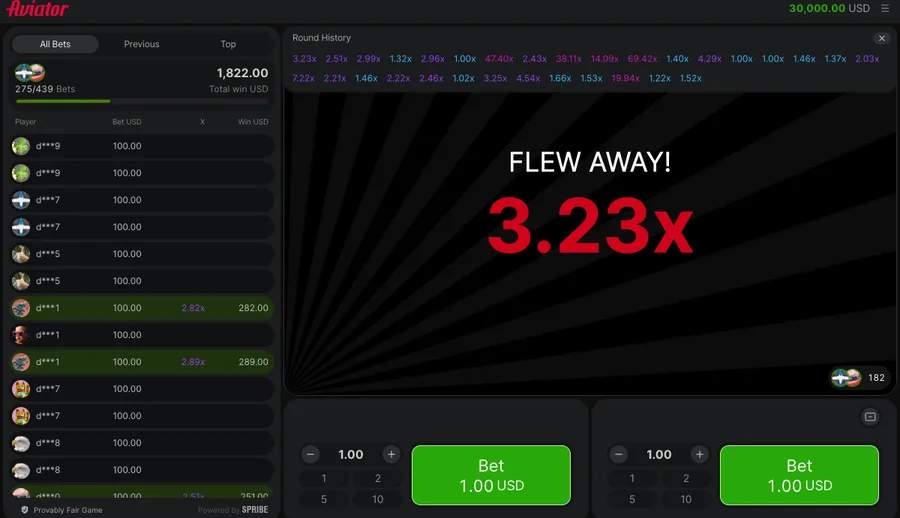
The chance of a round reaching any multiplier is 0.97 divided by that multiplier. Recorded on as an infographic page.
What It Deliberately Avoids
We read that nowhere.
The chance a round reaches 2x is 48.50%, and 5x is 19.40%.
Read Round Odds Table before deciding anything.
| Field | As recorded |
|---|---|
| Type | Infographic |
| Published | |
| Last edit | |
| Read it | Round Odds Table |
Aviator Session Frames
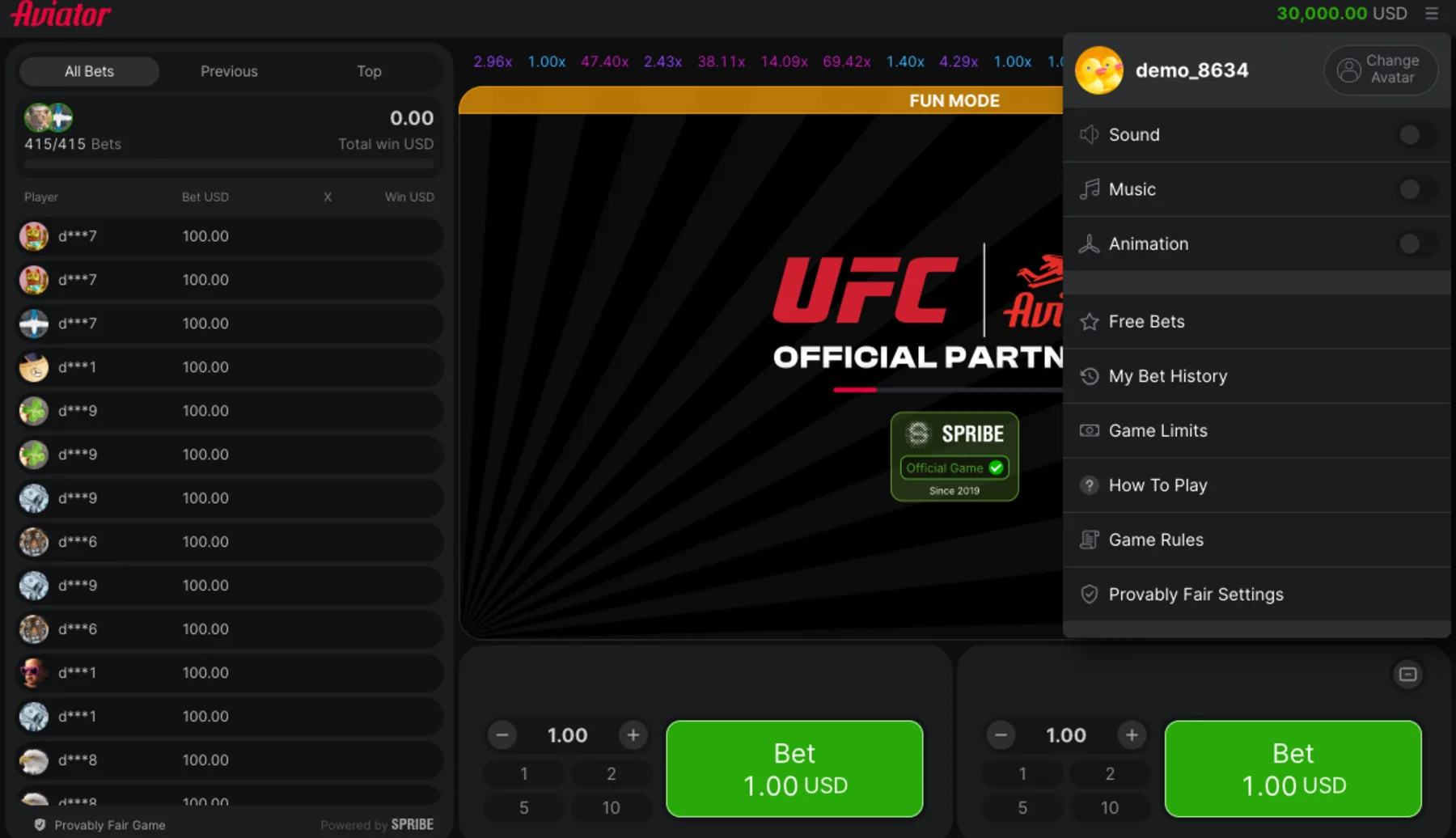
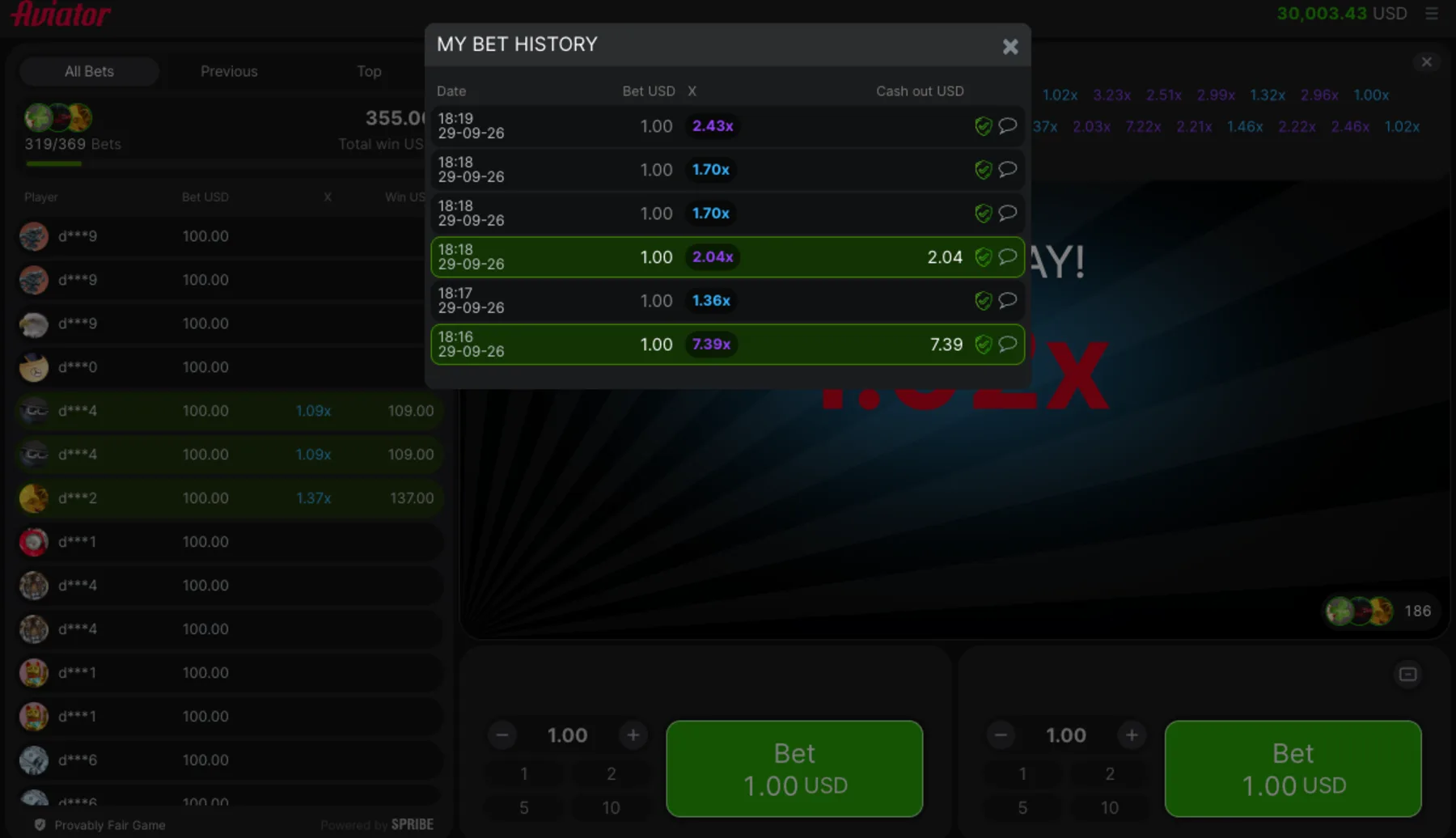
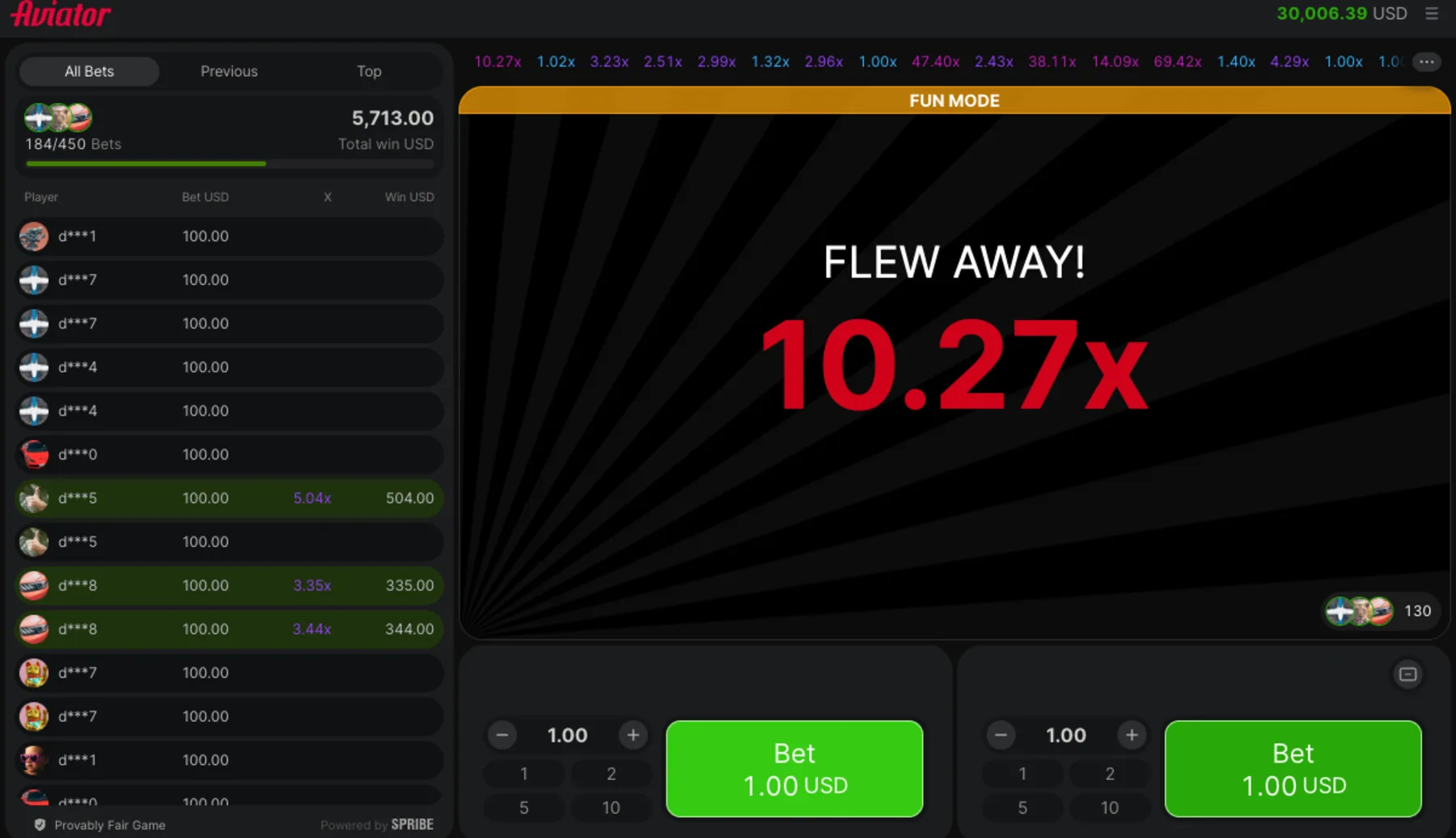
Every Aviator frame below comes from our own recorded demo and lobby sessions, and each caption says exactly what its frame shows.
A frame keeps the caption its manifest entry earns. That is why an idle game screen is labelled an idle screen.
The manifest records exactly what each frame shows, and our method forbids us from claiming a word more than that.
- We captured every frame ourselves, in the sessions its manifest entry records.
- A frame is reused across pages only when it genuinely illustrates both.