

Aviator Game Odds: The Arithmetic Behind a Round
In short: Aviator gives a round a 48.50% chance of reaching 2x and a 9.70% chance of reaching 10x. Both come out of the round formula we checked against three finished rounds, where the constant is 97.
The chance of a round reaching any multiplier is 0.97 divided by that multiplier. We read that nowhere. We derived it from the round formula after reproducing three results in Spribe's official demo.
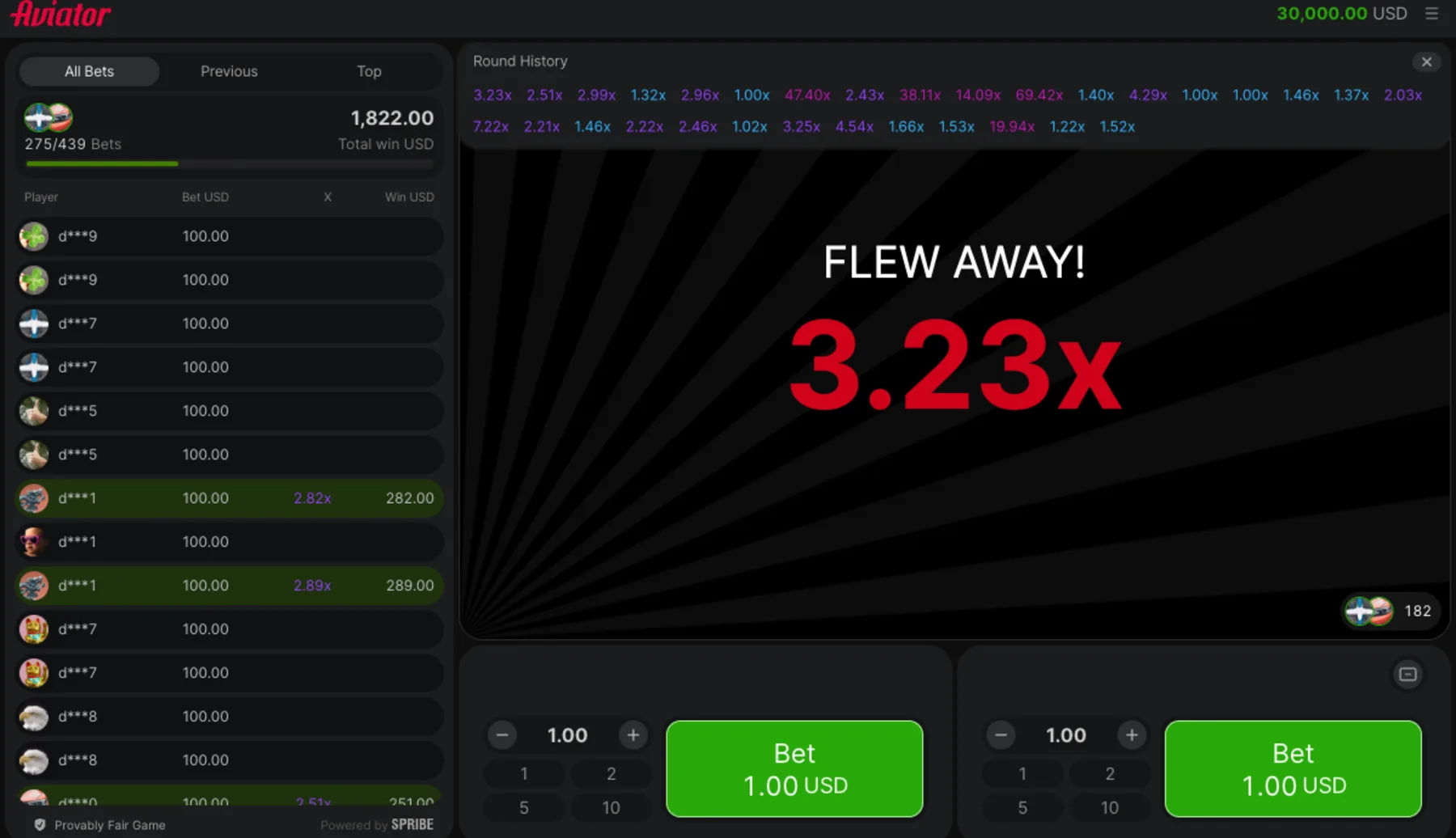
Source: Derived from the round formula we reproduced ourselves on three finished rounds in Spribe's official Aviator demo on , cross-checked against a 30-round snapshot of the demo's Round History panel read the same evening. Percentages come from the formula, not from a sample of play.
What 0.97 over M Actually Means
Divide 0.97 by the multiplier you plan to leave at, and that is your share of rounds. Leave at 2x and you are betting on 48.50% of rounds. Move the exit to 10x and the share drops to 9.70%. The rule holds for any target you pick, because it falls out of the shape of the formula rather than from a table someone compiled.
That is the whole model.
Read it the other way and the round history strip stops looking strange. Roughly one round in twenty-five ends below 1.01x, so three instant crashes inside thirty rounds is an ordinary run.
Why the Curve Has No Ceiling
Flight time is the only thing standing between a round and a bigger number. The client prints its own growth rule, floor(100 × e^(0.000083 × ms)) ÷ 100, where ms counts the milliseconds since the plane left the ground. Nothing in that expression caps out. A plane that stays up twice as long lands somewhere far past twice the multiplier, which is why the big numbers in any history strip cluster around the rare long flights.
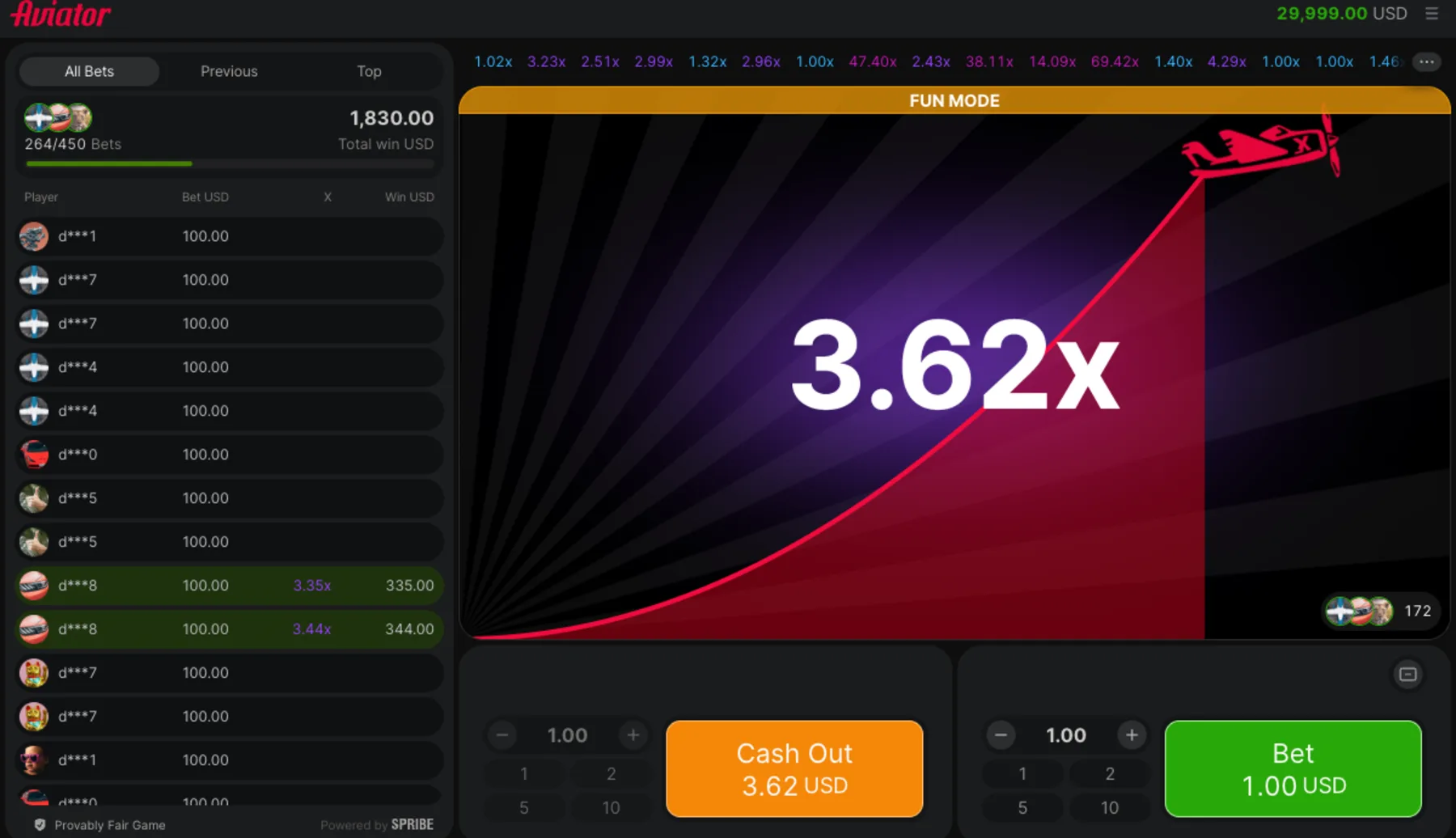
How the Multiplier Grows with Flight Time
| Flight time | Multiplier | Nearest round in our snapshot |
|---|---|---|
| 1 second | 1.08x | below every entry we logged |
| 5 seconds | 1.51x | the 1.52x round |
| 10 seconds | 2.29x | the 2.21x round |
| 30 seconds | 12.06x | just under the 14.09x round |
| 51 seconds | 69.42x | the highest round we saw |
Figures current as of ; the operator's live terms prevail.
Those pairings are a sanity check, not a measurement. We did not time the rounds with a stopwatch; we ran the client's formula backwards from the multipliers it recorded and confirmed the answers land in a plausible range.
Where the Snapshot Drifts
Thirty rounds agreed with the formula in shape and disagreed in detail, which is what a run that short should do. Our snapshot overshot at 2x by eight points. Its three instant crashes in thirty rounds worked out at 10.00% against the 3.96% the formula gives, two and a half times the rate on a sample far too small to carry that difference.
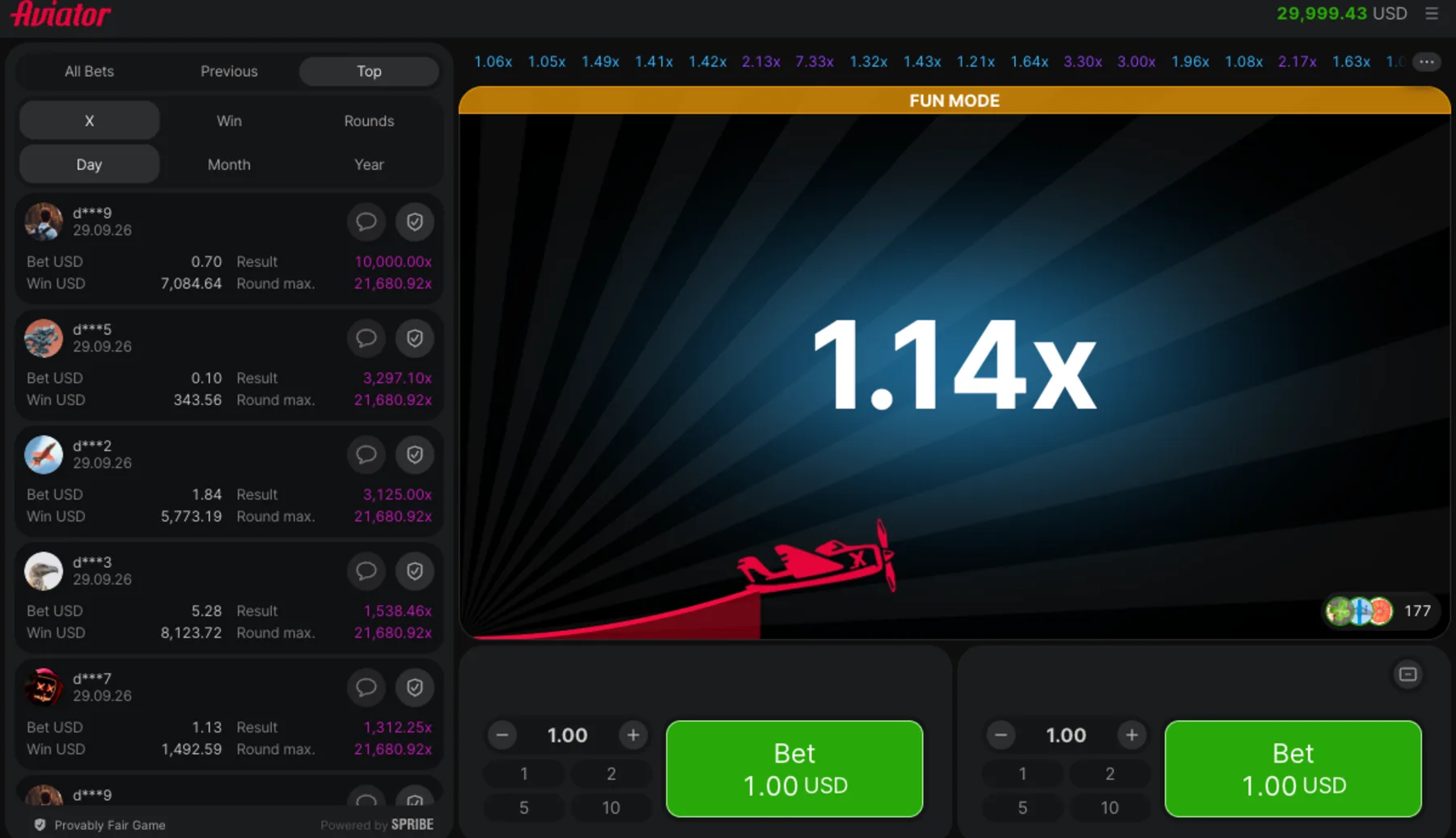
Small samples wander.
Formula Against a Thirty-Round Snapshot
| Threshold | Formula | Our thirty rounds |
|---|---|---|
| Reached 1.5x | 64.67% | 66.67% |
| Reached 2x | 48.50% | 56.67% |
| Reached 3x | 32.33% | 30.00% |
| Ended at 1.00x | 3.96% | 10.00% |
Three instant crashes out of thirty looks alarming until you work out how often a fair run produces it. At a true rate of 3.96%, thirty rounds throw up three or more instant crashes often enough that nobody should read a pattern into it.
The Cost of Aiming Higher
Every cash-out target returns the same 0.97, and that is the quiet result buried in the arithmetic. A 2x exit pays double, and it arrives just under half the time. A 10x exit pays five times more, yet it arrives about a fifth as often. Multiply the payout by its chance in either case and the answer is 0.97 of your stake, so moving the target changes how bumpy the ride feels while leaving the long-run figure untouched.
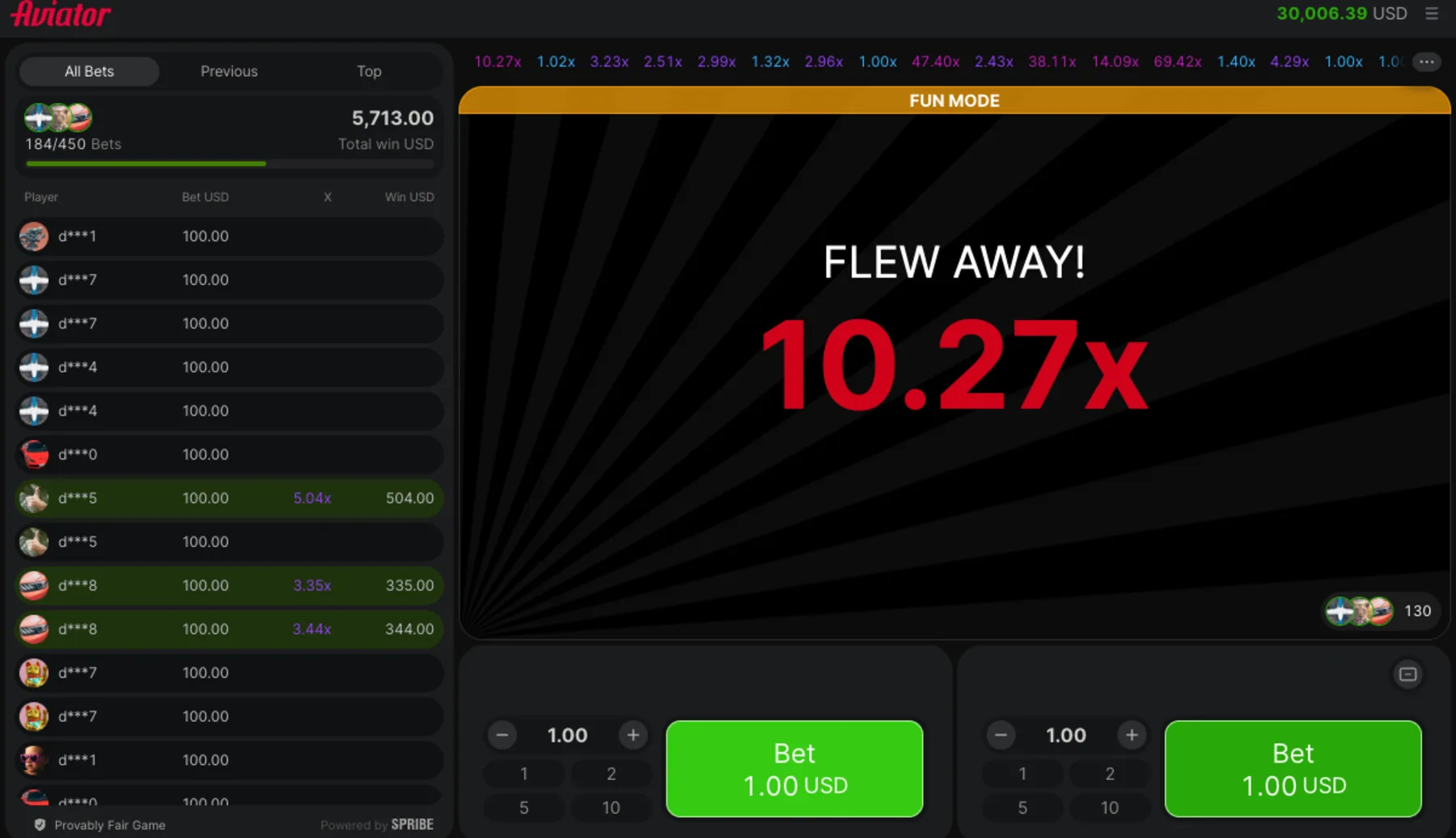
Bankroll swings do change, though, and that is the real decision. A 10x target loses nine rounds in ten, so the same 0.97 arrives in rarer, larger pieces.
What This Cannot Tell You
Three rounds is what we verified, and everything above inherits that limit.
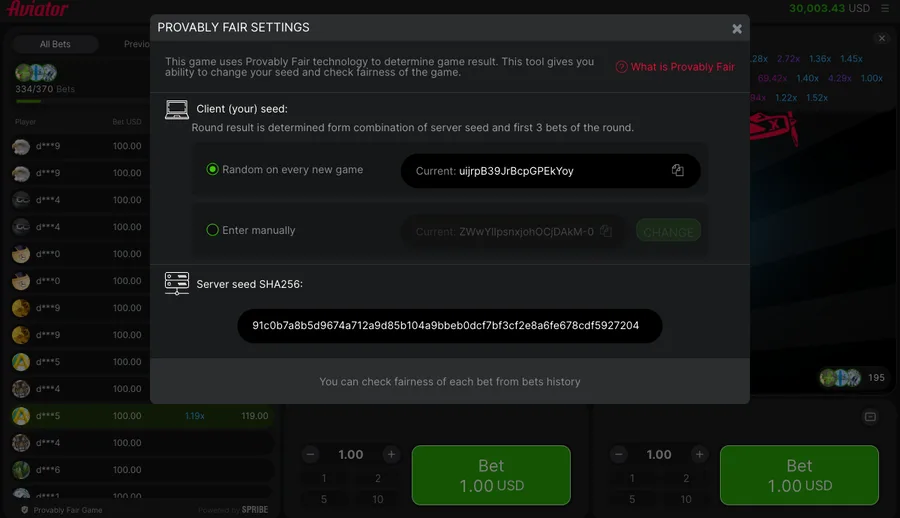
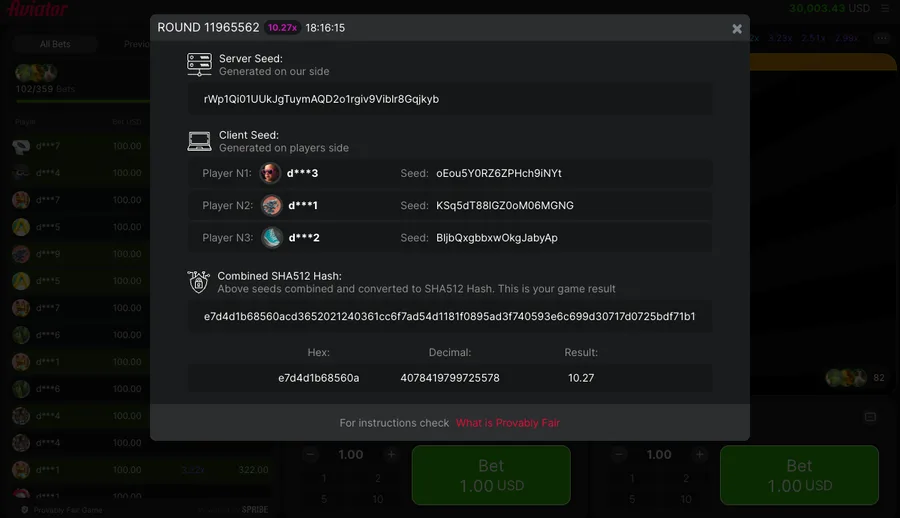
We reproduced rounds 11965562, 11965577 and 11965609 from their seeds and found the constant 97 sitting inside the formula. Auditing the game was beyond us, and a deployment running a different constant stays possible.
That caveat has teeth here. Spribe hands the return figure to whoever deploys the client, so a casino running a lower number would shift every percentage on this page down in proportion, and the only place to read the figure behind a particular lobby is that operator's own rules screen.
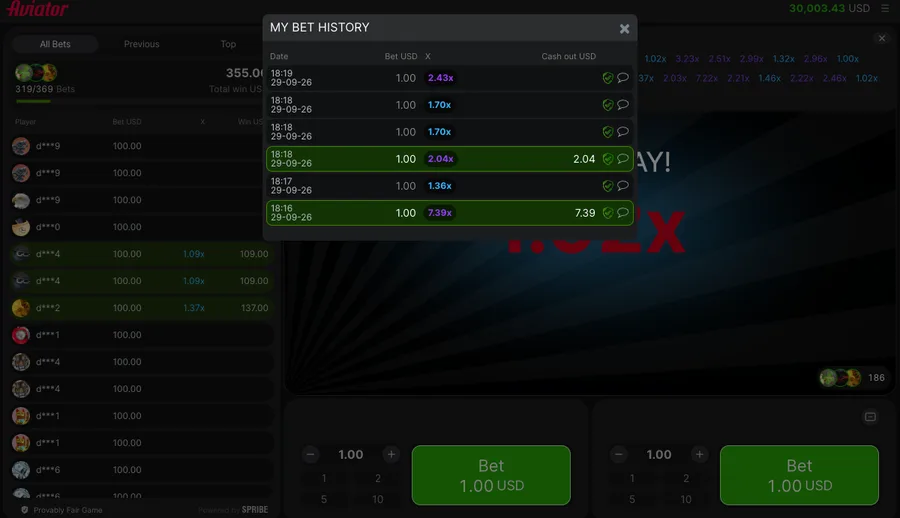
Our own ten-round session came back at 94.3%, which sits below the constant and proves nothing either way at that length.
Key Terms Used on This Page
- Crash point
- The multiplier where a round ends, fixed before the first bet by a SHA-512 hash of four seeds.
- The 97 constant
- The number inside the round formula, matching the 97% return Spribe publishes on its game page.
- Flight time
- The clock the curve runs on; 30 seconds of flight works out at 12.06x in the client's own rule.
- Instant crash
- A round ending below 1.01x, which the formula puts at 3.96% and our snapshot showed 3 times in 30.
Not sure yet? Try the free demo first and learn the round with play money before any deposit.
Try the free demo first →Deposits and identity checks stay on the operator's own secure site.
Related Reading on This Game
More on this game, from the same section first:
 Reference
Provably Fair Explained
3 rounds reproduced from published seeds
 Reference
The 97% Figure
97% published by Spribe, once
 Reference
Max Multiplier Claims
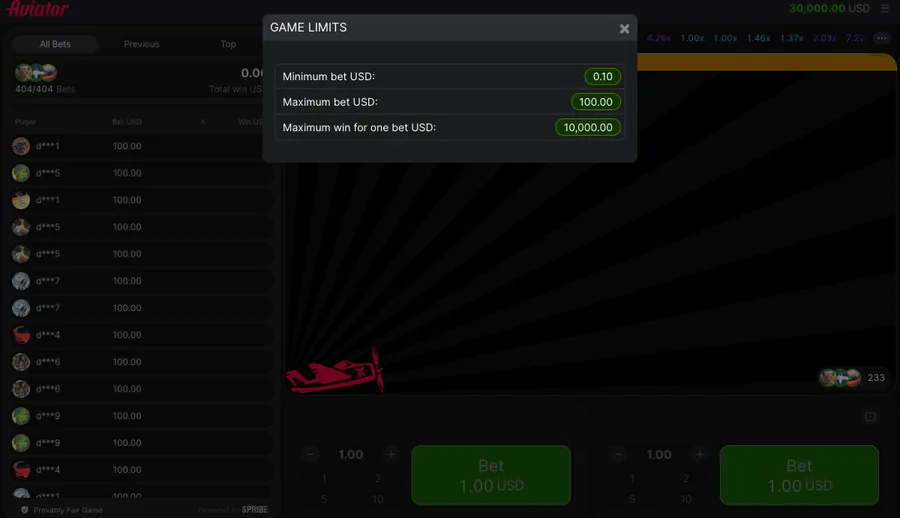
No ceiling published; demo caps 10,000.00 USD
 Reference
Legality in India
67 providers listed, zero Spribe rows
 Reference
Crash Game Rivals
3 rounds verified, rivals not confirmed
 Reviews
Full Game Review
97% sits inside the round formula